

What Is Endodontics? Root Canal Treatment and Tooth Pain Explained
Root canal treatment saves millions of teeth every year — modern endodontics is far more comfortable than its reputation suggests.

DentalHealth Team
Apr 23, 2026Updated Aug 30, 2026 7 min read
Overview
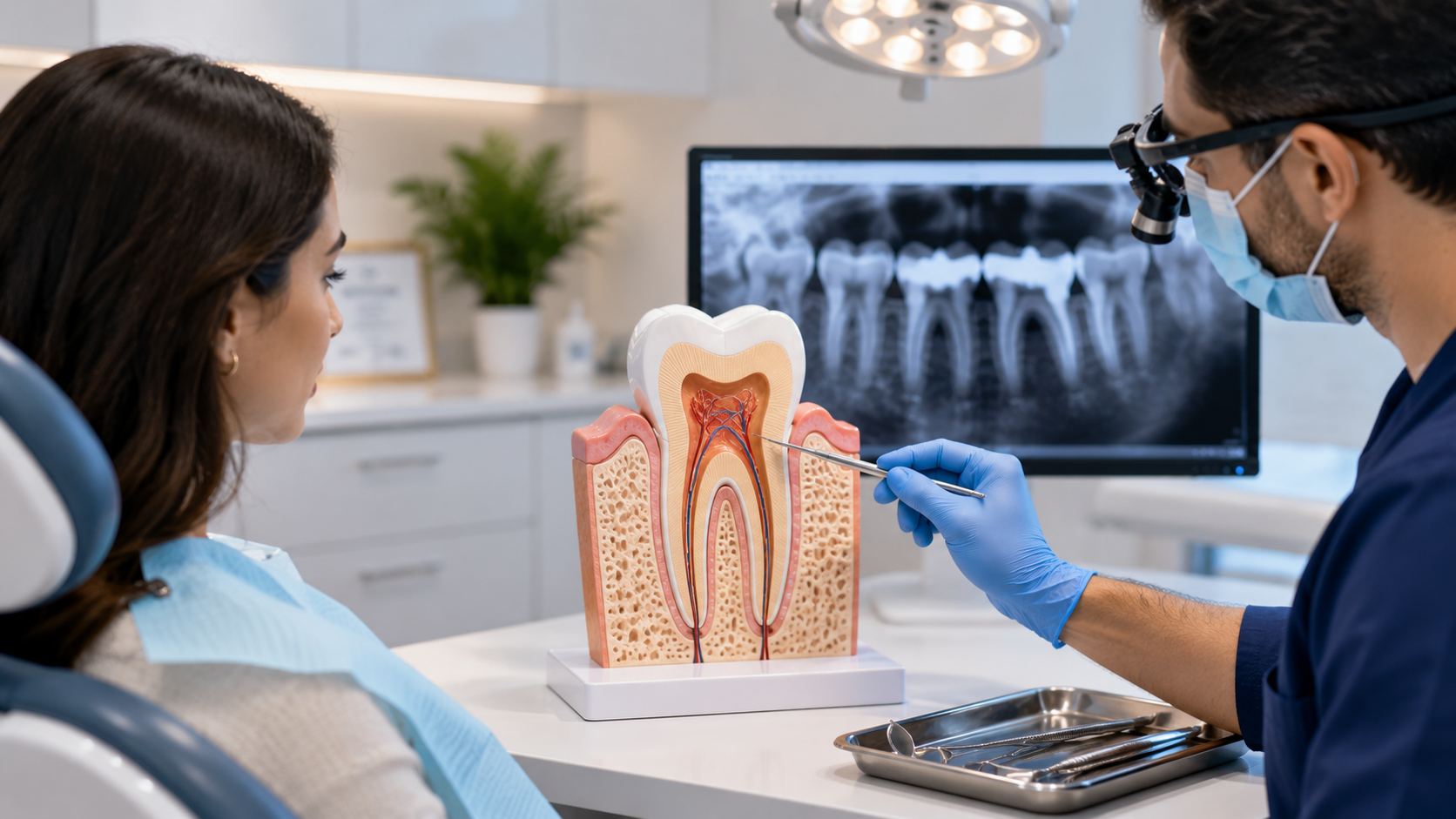
Endodontics is the dental specialty focused on the diagnosis and treatment of conditions affecting the dental pulp and the tissues surrounding the roots of the teeth. The word endodontics comes from the Greek words meaning inside (endo) and tooth (odontos). An endodontist completes two or more years of postgraduate training after dental school, specialising in the complex diagnosis and treatment of tooth pain and inner tooth structures.
The most well-known endodontic procedure is root canal treatment. Despite its reputation, modern root canal therapy is a routine and typically comfortable procedure that saves millions of teeth every year.
What Is the Dental Pulp?
The dental pulp is the soft inner tissue at the centre of each tooth. It contains nerves, blood vessels, and connective tissue that are responsible for the tooth’s development and sensitivity. Once a tooth is fully formed, it can survive without the pulp because it receives nutrients from the surrounding tissues. Removing infected or inflamed pulp resolves pain and infection while preserving the natural tooth structure.
When Is Endodontic Treatment Needed?
Endodontic treatment becomes necessary when the dental pulp becomes inflamed or infected. This can occur as a result of deep tooth decay, repeated dental procedures on the same tooth, a cracked or fractured tooth, or trauma to the mouth. Common symptoms include severe toothache when biting or chewing, prolonged sensitivity to heat or cold, darkening of the tooth, swelling or tenderness in the surrounding gum, and a persistent pimple-like swelling on the gum.
What Happens During Root Canal Treatment?
The procedure is performed under local anaesthesia. Access to the pulp chamber is created through the top of the tooth. The infected or inflamed pulp tissue is removed from the canals using fine instruments. The canals are cleaned, shaped, and disinfected using irrigating solutions including sodium hypochlorite. The canals are then filled with a biocompatible material called gutta-percha and sealed. In most cases, the tooth subsequently receives a crown to restore its strength and protect it from fracture.
Is Root Canal Treatment Painful?
The procedure is performed under local anaesthesia and should not cause pain. Research shows that patients who have had root canal treatment rate the experience as no more uncomfortable than having a filling. After the procedure, mild soreness and sensitivity for a few days are normal as the tissues around the tooth heal.
Root Canal vs Tooth Extraction
Endodontists and dentists generally recommend saving the natural tooth whenever possible. A root canal treatment preserves the tooth’s root, maintains the jawbone, and avoids the need for a replacement such as an implant or bridge. Saving a natural tooth is typically more cost-effective in the long run and produces better functional outcomes.
Frequently Asked Questions
How long does root canal treatment take?
A straightforward root canal treatment on a single-rooted tooth can often be completed in one appointment lasting 60 to 90 minutes. Molar teeth with multiple canals may require two or three appointments.
How much does root canal treatment cost?
In the USA, a root canal on a front tooth costs approximately USD 700 to USD 1,000. A molar root canal costs USD 1,000 to USD 1,500. Adding a crown brings the total to USD 2,000 to USD 3,500. In Turkey, the same treatment can cost USD 150 to USD 400 plus the crown cost.
What happens if I do not get a root canal?
Delaying or refusing root canal treatment for an infected tooth allows the infection to progress. The tooth will eventually need extraction. More seriously, dental infections can spread to the jaw, neck, or even the brain in rare cases. Dental infections should always be treated promptly.
Dental news for professionals, weekly.
Join dental professionals getting our weekly brief.
No spam. Just useful dental intelligence.
Need a dental consultation?
Send your question and we will route it to the right contact.