

What Is Orthodontics? Braces, Clear Aligners and Bite Correction Explained
Orthodontics goes beyond straight teeth — it corrects bites, prevents long-term damage, and is effective at any age with braces or clear aligners.

DentalHealth Team
Mar 12, 2026Updated Aug 30, 2026 8 min read
Overview
Orthodontics is the dental specialty focused on diagnosing, preventing, and correcting misaligned teeth and jaws. An orthodontist is a dentist who completes two to three years of additional postgraduate training exclusively in the diagnosis and treatment of malocclusion, the clinical term for a bad bite.
The goal of orthodontic treatment is not just aesthetic. Correcting bite alignment reduces the risk of tooth wear, gum disease, jaw pain, and difficulty chewing. The American Association of Orthodontists recommends that children have their first orthodontic screening by the age of seven, though treatment is effective at any age.
What Conditions Does Orthodontics Treat?
Orthodontists treat a range of conditions related to tooth and jaw alignment. These include crowded teeth, where there is insufficient space in the jaw for all teeth to fit properly; widely spaced teeth; an overbite, where the upper front teeth overlap excessively over the lower front teeth; an underbite, where the lower teeth protrude beyond the upper teeth; a crossbite, where upper teeth bite inside lower teeth on one or both sides; and an open bite, where upper and lower teeth do not meet when the mouth closes.
Orthodontic Treatment Options
Traditional Metal Braces
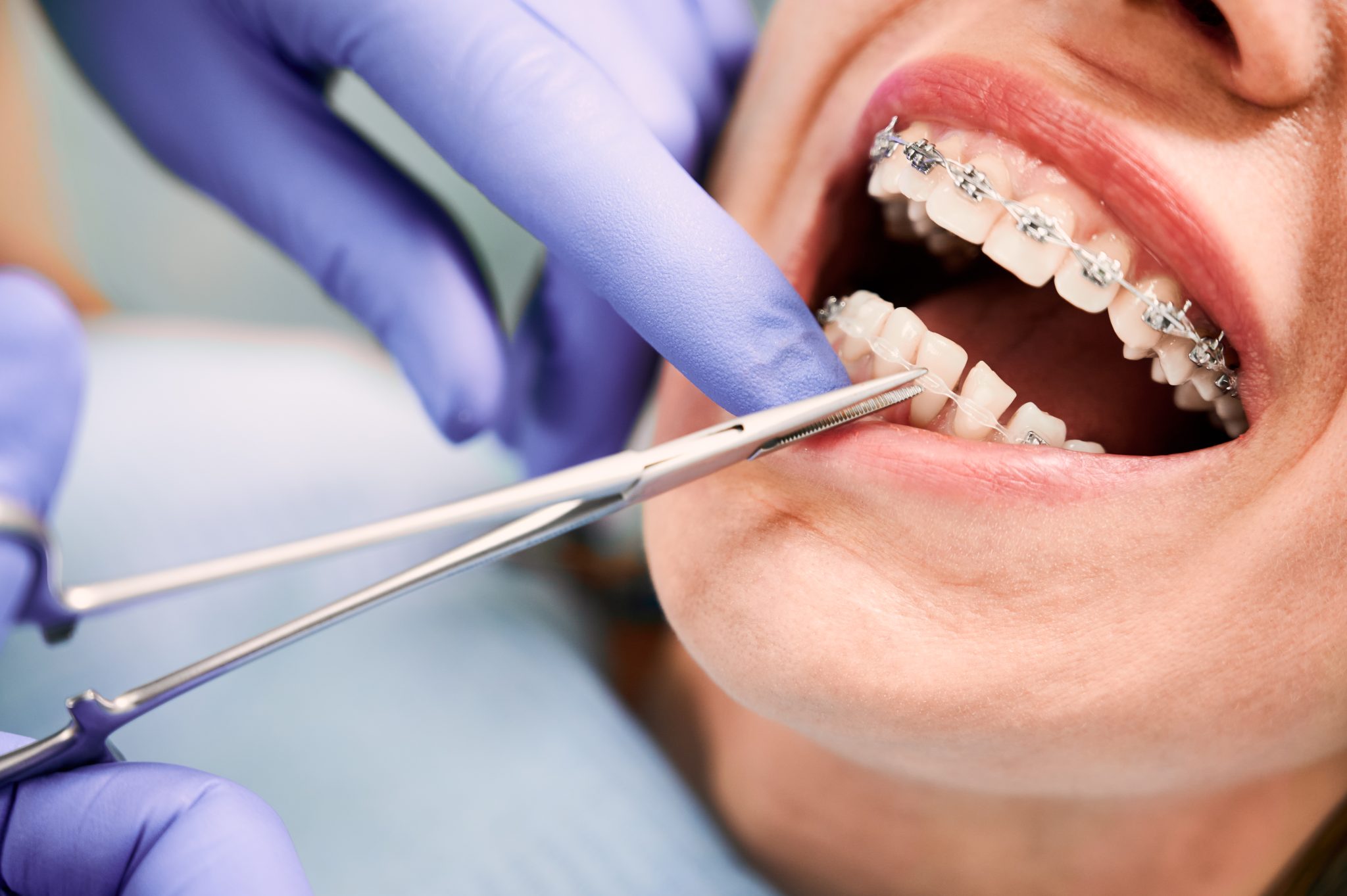
Metal braces remain one of the most effective and widely used orthodontic appliances. They consist of metal brackets bonded to each tooth, connected by a wire that is adjusted at regular intervals to gradually move teeth into the correct position. Metal braces are particularly effective for complex cases and work for all ages. Treatment typically takes 18 months to three years depending on the severity of the case.
Ceramic Braces
Ceramic braces work the same way as metal braces but use tooth-coloured or clear ceramic brackets that are less visually noticeable. They are a popular option for adults and older teenagers who want the effectiveness of traditional braces with less visible hardware.
Clear Aligners
Clear aligners, with Invisalign being the most widely recognised brand, use a series of custom-made, removable transparent trays to progressively move teeth. Patients wear each set of aligners for approximately one to two weeks before advancing to the next in the series. Aligners are virtually invisible and can be removed for eating and cleaning. They are best suited to mild to moderate cases. Compliance is essential, as aligners must be worn 20 to 22 hours per day to be effective.
Retainers
After active orthodontic treatment is complete, retainers maintain the new position of the teeth. Teeth have a natural tendency to return to their original position over time, a process called relapse, which is prevented by consistent retainer wear. Retainers may be removable or fixed (bonded to the back surfaces of the teeth).
Orthodontic Treatment Costs
In the United States, traditional metal braces cost between USD 3,000 and USD 7,000. Ceramic braces range from USD 4,000 to USD 8,000. Clear aligners such as Invisalign range from USD 3,500 to USD 8,000. In dental tourism destinations, costs are considerably lower. Metal braces in Turkey typically range from USD 1,000 to USD 2,500, and Invisalign from USD 1,500 to USD 3,000.
Frequently Asked Questions
What is the difference between a dentist and an orthodontist?
All orthodontists are dentists, but not all dentists are orthodontists. An orthodontist completes an accredited two-to-three year postgraduate residency in orthodontics after dental school. Complex cases are best managed by a specialist orthodontist.
At what age should children first see an orthodontist?
The American Association of Orthodontists recommends an orthodontic screening by age seven. This does not mean treatment will start then, but it allows the orthodontist to monitor jaw development and identify any issues that benefit from early intervention. Most treatment begins between the ages of 11 and 14.
Can I get orthodontic treatment abroad?
Yes. Orthodontic treatment, particularly clear aligner therapy, is increasingly popular among dental tourists. Clear aligners are designed using digital software that is the same worldwide, making remote case monitoring and cross-border treatment more manageable.
Dental news for professionals, weekly.
Join dental professionals getting our weekly brief.
No spam. Just useful dental intelligence.
Need a dental consultation?
Send your question and we will route it to the right contact.