

What Is Implant Dentistry? Everything You Need to Know About Dental Implants
Dental implants are the gold standard for replacing missing teeth — permanent, natural-feeling, and built to last a lifetime with proper care.

DentalHealth Team
Feb 26, 2026Updated Aug 30, 2026 8 min read
Overview
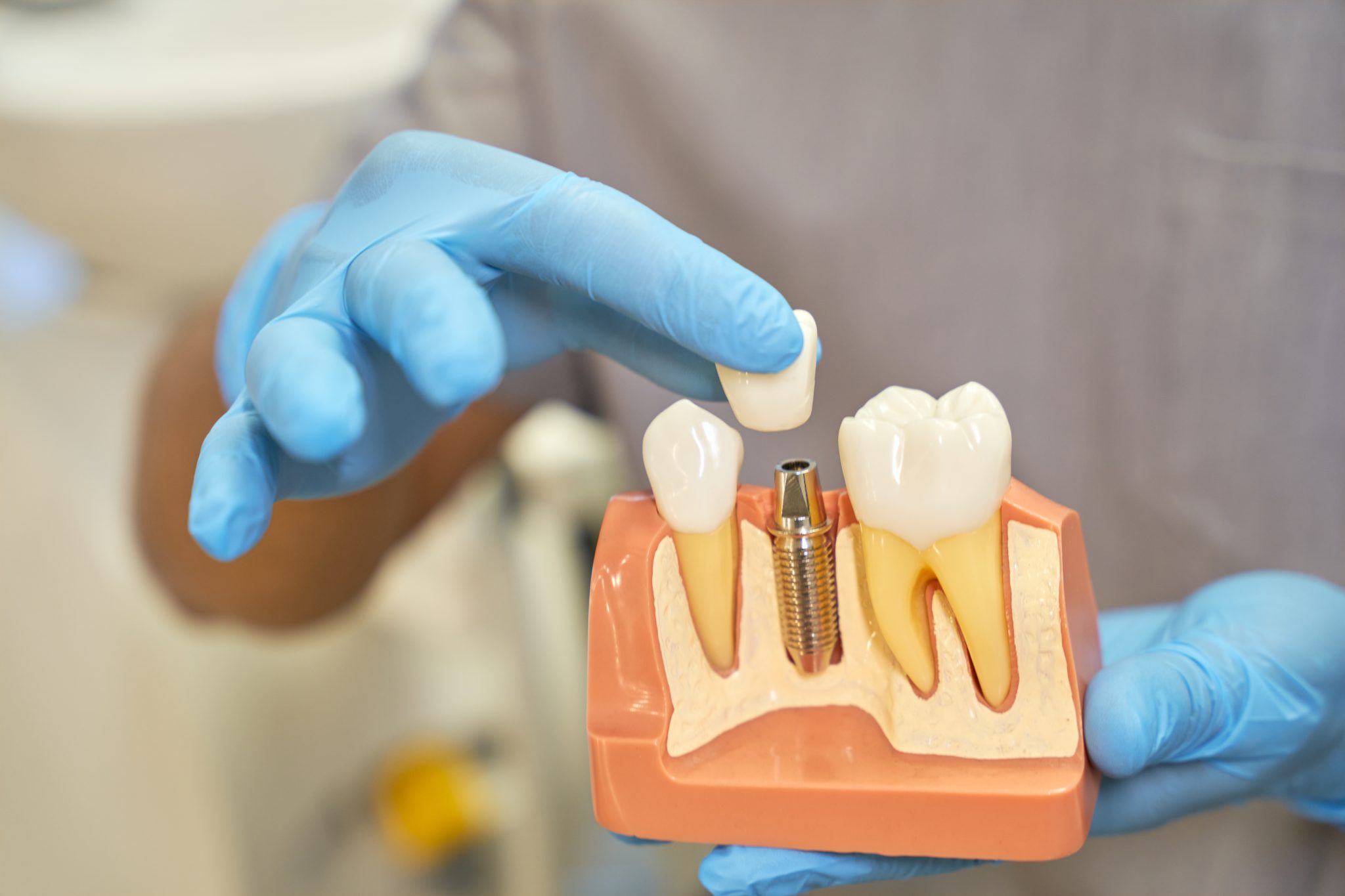
Implant dentistry focuses on the replacement of missing teeth using surgically placed artificial tooth roots. A dental implant is a small titanium or zirconia post inserted into the jawbone, onto which a crown, bridge, or denture is attached. Dental implants are widely considered the gold standard for tooth replacement because they function like natural teeth, preserve jawbone structure, and can last a lifetime with proper care.
Approximately 3 million dental implants are placed in the United States each year, and that number continues to rise as the technology becomes more accessible and awareness grows.
How Dental Implants Work
The dental implant process works through a biological mechanism called osseointegration, in which the bone cells of the jaw grow around and fuse with the titanium surface of the implant post over a period of weeks to months. This creates a stable foundation that can bear the full biting force of a natural tooth.
The implant system consists of three components: the implant fixture (the post placed in the bone), the abutment (a connector piece that extends above the gum line), and the prosthetic crown or restoration that is visible in the mouth.
Types of Dental Implants
Single Tooth Implants
A single implant replaces one missing tooth. It consists of one implant post, one abutment, and one crown. The surrounding natural teeth are not altered, making this the most conservative option for tooth replacement.
All-on-4 and All-on-6 Implants
The All-on-4 and All-on-6 techniques allow a full arch of teeth to be supported by just four or six strategically placed implants. This approach is suitable for patients who have lost most or all of their teeth and provides a permanent, non-removable alternative to full dentures. The procedure can often be completed with a temporary full arch prosthesis placed on the same day as implant surgery.
Mini Dental Implants
Mini implants are narrower than standard implants and are used in cases where the jawbone is too narrow or thin to support a regular implant, or to stabilise lower dentures. They involve a less invasive procedure and a shorter healing period.
The Dental Implant Procedure
At the initial consultation, the dentist or oral surgeon assesses the patient’s bone density and gum health using CBCT scans and dental X-rays. If significant bone loss is present, bone grafting may be required before implant placement. In the surgical phase, the implant post is placed under local anaesthesia. The healing phase that follows, during which osseointegration occurs, usually takes three to six months. After this, the abutment is attached and a custom crown is fabricated and fitted.
Dental Implant Costs
In the United States, a single dental implant including surgery, abutment, and crown typically costs between USD 3,000 and USD 5,000. In the United Kingdom, costs range from GBP 2,000 to GBP 3,500. In dental tourism destinations, the same treatment can cost between USD 700 and USD 1,500. Turkey, Hungary, and Mexico are consistently popular destinations for affordable implant treatment from qualified specialists.
Frequently Asked Questions
How painful is dental implant surgery?
The procedure is performed under local anaesthesia and most patients report that it is more comfortable than they expected. Post-operative discomfort, swelling, and bruising are normal for a few days and are managed with over-the-counter pain relief.
How long does the full implant process take?
From initial consultation to final crown placement, the process typically takes three to nine months. The majority of this time is healing. Cases requiring bone grafting may extend the timeline to 12 months or more.
Can dental implants fail?
Implant failure occurs in approximately 5 percent of cases. Risk factors include smoking, uncontrolled diabetes, poor oral hygiene, insufficient bone density, and infection at the implant site. Most failures occur in the first year, and in many cases a replacement implant can be placed successfully.
Dental news for professionals, weekly.
Join dental professionals getting our weekly brief.
No spam. Just useful dental intelligence.
Need a dental consultation?
Send your question and we will route it to the right contact.