

What Is Sedation Dentistry? Types, Safety and What to Expect
Sedation dentistry makes dental care accessible for anxious patients — from nitrous oxide to IV sedation, here is what each option involves.

DentalHealth Team
Jun 4, 2026Updated Aug 30, 2026 7 min read
Overview
Sedation dentistry uses medication to help patients relax during dental procedures. It is used for patients who experience dental anxiety or phobia, have a strong gag reflex, require lengthy or complex treatment in a single visit, have difficulty sitting still, or simply prefer a more relaxed dental experience. Sedation dentistry makes treatment accessible to many people who would otherwise avoid the dentist altogether.
Most sedation techniques allow the patient to remain conscious and able to respond to the dentist’s instructions, though they feel deeply relaxed and may have little memory of the procedure afterwards.
Levels of Sedation
Sedation in dentistry is classified into four levels based on depth. Minimal sedation produces a relaxed, anxiety-free state while the patient remains fully awake. Moderate sedation, sometimes called conscious sedation, produces a deeper level of relaxation in which the patient may slur their words and have reduced awareness. Deep sedation places the patient on the edge of consciousness, able to be awakened with stimulation. General anaesthesia renders the patient completely unconscious.
Types of Dental Sedation
Nitrous Oxide
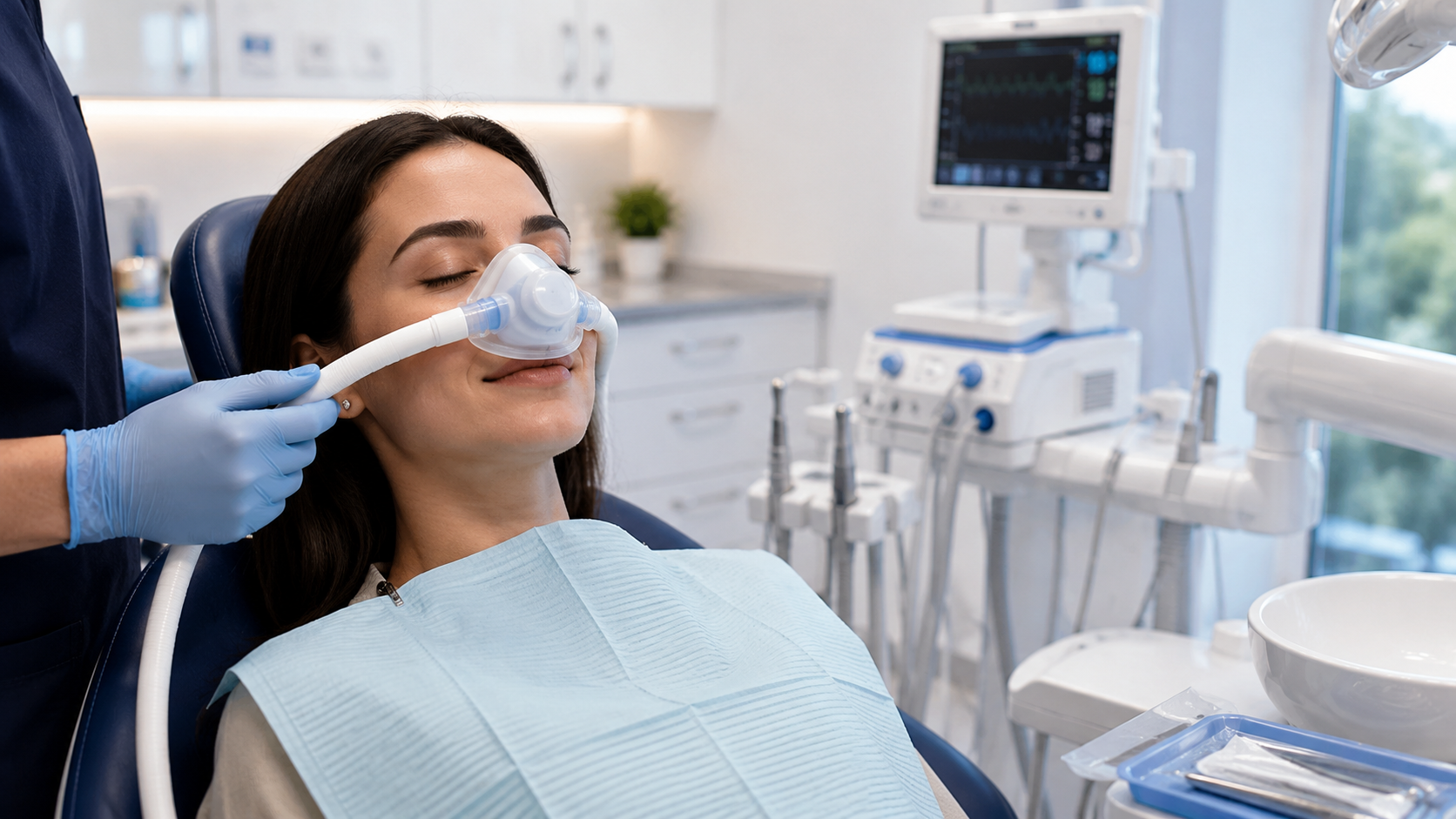
Nitrous oxide, commonly known as laughing gas, is the mildest and most widely available form of dental sedation. A mask is placed over the nose and the patient inhales a mixture of nitrous oxide and oxygen throughout the procedure. The effects wear off almost immediately after the mask is removed, allowing patients to drive themselves home. Nitrous oxide is safe for children as well as adults.
Oral Sedation
Oral sedation involves taking a prescribed sedative medication, usually a benzodiazepine such as triazolam or diazepam, by mouth approximately one hour before the appointment. The patient arrives already feeling relaxed and drowsy. Oral sedation produces moderate sedation in most patients. A driver is required as the effects last several hours. Patients may have limited memory of the procedure.
Intravenous Sedation
Intravenous (IV) sedation delivers sedative medication directly into the bloodstream, producing a rapid and controllable level of sedation. The dentist or a sedation specialist can adjust the dose throughout the procedure. IV sedation produces a deeper level of relaxation than oral sedation and is used for more anxious patients or longer appointments. Patients typically have little to no memory of the treatment.
General Anaesthesia
General anaesthesia renders the patient fully unconscious and is used in a hospital or specialist clinic setting for very complex oral surgeries, young children who cannot cooperate with treatment, or patients with severe special health care needs. An anaesthetist manages the patient throughout the procedure.
Is Sedation Dentistry Safe?
When administered by a trained and qualified dental professional, sedation dentistry is safe. Dentists who offer moderate or deep sedation must hold additional qualifications and certifications in sedation administration. Patients are assessed prior to sedation to ensure there are no contraindications, such as certain heart conditions, respiratory conditions, pregnancy, or known allergies to sedative medications.
Frequently Asked Questions
Will I be completely unconscious during sedation dentistry?
Only with general anaesthesia. Nitrous oxide, oral sedation, and IV sedation typically allow you to remain conscious but in a relaxed, drowsy state. Many patients have little memory of the procedure, but they are able to respond to the dentist’s instructions throughout.
Can I eat before sedation dentistry?
For nitrous oxide, eating beforehand is generally fine, though a light meal is recommended to avoid nausea. For oral and IV sedation, you will be asked to fast for at least six hours beforehand. For general anaesthesia, strict nil by mouth instructions must be followed.
How much does sedation dentistry cost?
Nitrous oxide typically adds USD 50 to USD 150 to an appointment cost. Oral sedation adds USD 200 to USD 500. IV sedation ranges from USD 500 to USD 1,000 per appointment. General anaesthesia in a hospital setting can cost USD 1,500 or more. Sedation costs are in addition to the cost of the dental treatment itself.
How soon can I go back to work after sedation?
After nitrous oxide, you can return to normal activities including work and driving almost immediately. After oral or IV sedation, you should plan to rest for the remainder of the day and arrange a driver. You should not drive, operate machinery, or make important decisions for 24 hours after sedation.
Dental news for professionals, weekly.
Join dental professionals getting our weekly brief.
No spam. Just useful dental intelligence.
Need a dental consultation?
Send your question and we will route it to the right contact.