

What Is Laser Dentistry? Treatments, Benefits and What to Expect
Laser dentistry offers precise, low-pain alternatives for gum treatment, cavity removal, and whitening — find out how it works and what to expect.

DentalHealth Team
Feb 12, 2026Updated Aug 30, 2026 7 min read
Overview
Laser dentistry uses concentrated beams of light energy to perform a wide range of dental procedures with precision and minimal damage to surrounding tissue. The word LASER stands for Light Amplification by Stimulated Emission of Radiation. In dentistry, different types of lasers are used depending on whether the target is hard tissue (teeth and bone) or soft tissue (gums and other oral tissues).
The FDA cleared dental lasers for clinical use in 1990, and they are now used in thousands of dental practices worldwide. Laser dentistry is increasingly accessible as the technology becomes more affordable.
How Dental Lasers Work
Dental lasers deliver light energy at a precise wavelength that is absorbed by specific tissues. The laser energy removes or reshapes tissue, destroys bacteria, vaporises diseased tissue, and stimulates healing. Diode lasers are commonly used for soft tissue procedures. Erbium lasers are used on hard tissue such as enamel and dentine. Carbon dioxide lasers are used for oral lesion removal and soft tissue surgery.
Common Laser Dental Procedures
Gum Disease Treatment
Laser periodontal therapy uses laser energy to remove infected gum tissue and bacteria from around the teeth without the need for traditional surgical cutting and suturing. The laser also seals the treated area, reducing bleeding and promoting faster healing. This approach, sometimes called LANAP (Laser-Assisted New Attachment Procedure), is one of the most well-known laser dental treatments.
Cavity Detection and Treatment
Lasers can detect early-stage cavities by measuring the fluorescence of tooth tissue. For treatment, hard tissue lasers prepare the cavity area and remove decay without the vibration of a drill. Many patients find drill-free laser treatment significantly more comfortable, and in some cases no anaesthesia is needed.
Teeth Whitening
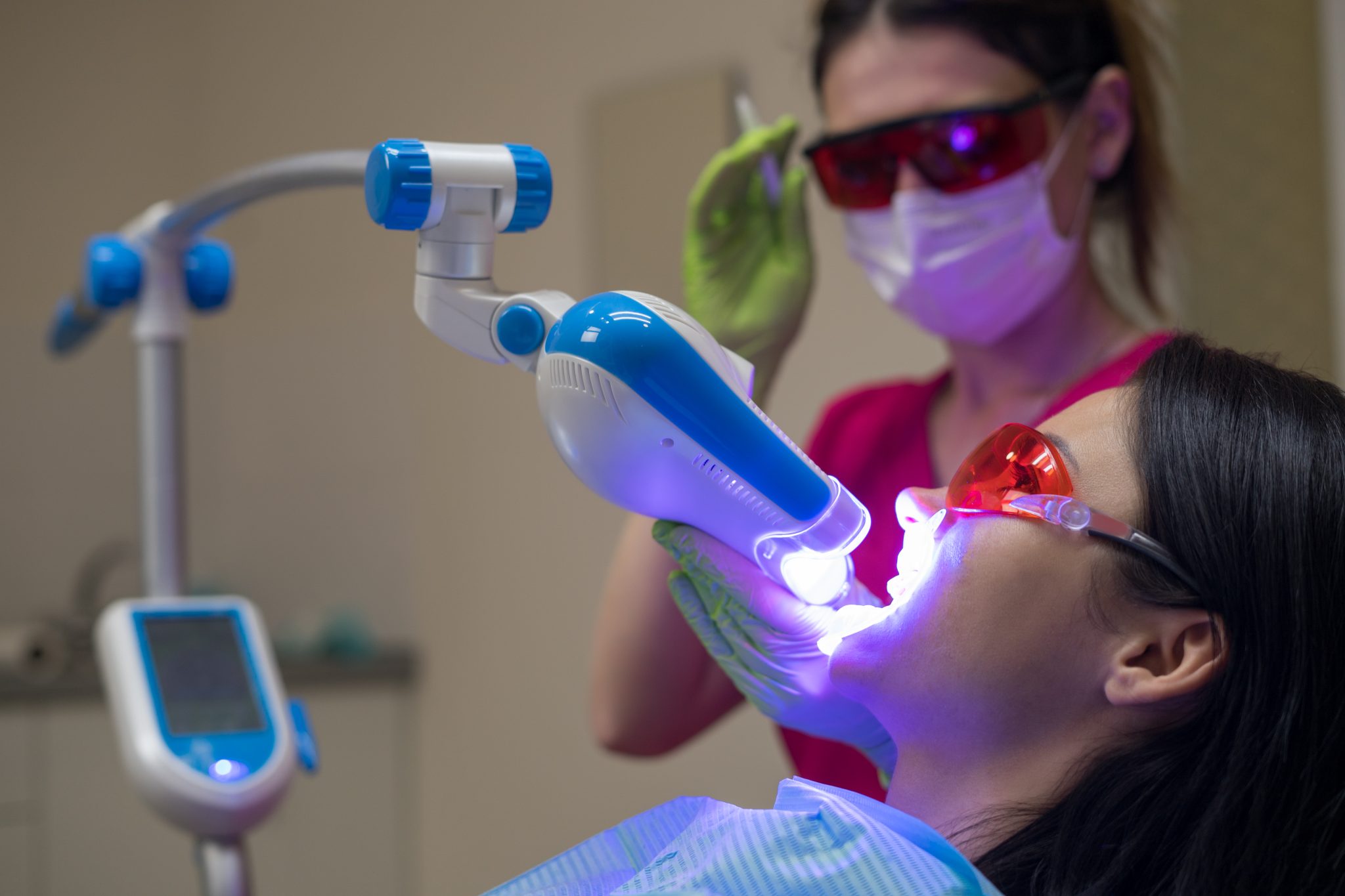
Laser-activated teeth whitening uses a concentrated light source to accelerate the bleaching process. The dentist applies a whitening gel to the teeth and uses the laser to activate the gel, speeding up the chemical reaction. In-office laser whitening sessions can achieve several shades of lightening in a single appointment.
Frenectomy
A frenectomy removes or modifies the frenum, the small fold of tissue that connects the lip to the gum or the tongue to the floor of the mouth. Laser frenectomy is quick, precise, and heals rapidly with no stitches, making it well-suited for both adults and infants with tongue-tie.
Benefits of Laser Dentistry
Laser dentistry offers several advantages compared to conventional techniques. Procedures often require less or no anaesthesia. Lasers are highly precise, minimising damage to surrounding healthy tissue. Bleeding is reduced because the laser seals blood vessels as it works. The risk of bacterial infection is lower because lasers sterilise the treatment area. Recovery time is often shorter.
Is Laser Dentistry Safe?
When used by a trained dental professional, laser dentistry is safe and effective. The dentist and patient wear protective eyewear during treatment. The FDA has cleared dental lasers for many procedures, and clinical evidence supports their use for soft tissue applications in particular.
Frequently Asked Questions
Does laser dentistry hurt?
Laser procedures are generally less painful than their conventional equivalents. For soft tissue procedures, many patients require no anaesthesia at all. For hard tissue procedures such as cavity preparation, anaesthesia may still be used, but the absence of drilling vibration makes the experience more comfortable for most patients.
How much does laser dental treatment cost?
Laser gum treatment may cost between USD 500 and USD 3,000 depending on the extent of disease. Laser teeth whitening typically costs USD 400 to USD 1,500. Laser frenectomy may range from USD 200 to USD 600. These procedures can often be obtained at lower cost through dental tourism in countries such as Turkey and Hungary.
Is laser teeth whitening better than standard whitening?
Laser or light-activated whitening typically works faster than gel-only methods and can achieve results in a single appointment. However, the degree of whitening achieved is similar to other professional in-chair treatments. Sensitivity can occur with any whitening method.
Dental news for professionals, weekly.
Join dental professionals getting our weekly brief.
No spam. Just useful dental intelligence.
Need a dental consultation?
Send your question and we will route it to the right contact.